

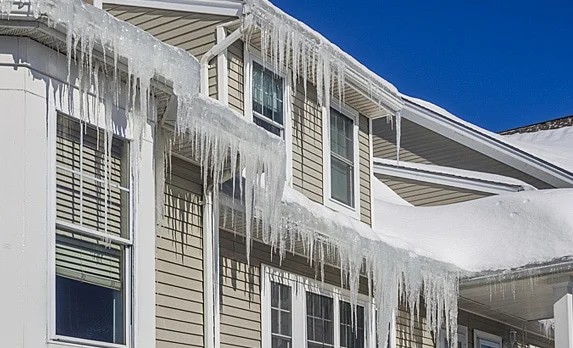
Ice damming is a common winter issue that can cause serious roof leaks and interior damage. While snow on a roof may look harmless, it can lead to costly problems if conditions are right.
Many property owners and associations are surprised to experience leaks even after installing a new roof. In most cases, this happens because ice dam prevention measures were not properly designed or installed.
When a roof system is correctly designed and installed, the risk of ice-dam-related damage can be greatly reduced.
What Causes Ice Dams?
Ice dams usually form due to a combination of the following conditions:
- Snow and ice buildup on the roof
- Frequent changes between warm and cold temperatures
- Poor attic insulation or ventilation that allows heat to escape
- Roofing installation issues, such as missing ice barrier membrane or drip edge
- Blocked or poorly functioning roof drainage systems
How Ice Dams Form
Ice dams form when warm air from inside the building escapes into the attic and heats the roof deck. Snow on the upper areas of the roof begins to melt. As the water flows downward, it reaches the colder eaves and gutters, which are not above heated spaces. The water then refreezes and creates a ridge of ice, known as an ice dam.
As the ice dam grows, it traps more melting snow behind it. This trapped water can back up under the shingles and eventually leak into the building, causing damage to ceilings, walls, insulation, and finishes.
Ice Barrier Membrane Vs. Ice and Water
Even with good ventilation, waterproofing at the roof edges is critical. Ice barrier membrane (IBM) is a waterproofing membrane installed under the shingles at vulnerable areas prone to moisture infiltration, such as at roof eaves.
Building codes require this membrane to extend at least 24-inches horizontally past the interior face of the exterior wall, which represents the area where melted water may back up and try to enter underneath shingles.
Drip edge flashing is also essential. When properly installed, it directs water away from the roof edge and into the gutter system. Together, ice barrier membranes and drip edges provide added protection when ice dams do occur.
These measures are not optional. They are required by building codes and by shingle manufacturers (and manufacturers of other steep-slope roof systems) to maintain warranty coverage and protect the roof deck and interior from moisture damage. Skipping proper ventilation or waterproofing can void a roof warranty that typically lasts 20 to 30 years, or more.

Why Ventilation Matters
Ice dams form when parts of the roof are warm and other parts remain cold. The best way to reduce this temperature difference is to create what is known as a “cold roof.”
A cold roof allows outside air to flow evenly along the underside of the roof deck. Cold air enters through soffit vents at the roof eaves, moves upward inside the attic, and exits through ridge vents or other roof vents at the ridge (or peak) of the roof. This airflow helps keep the roof surface at a consistent temperature, reducing snowmelt and refreezing.
If attic insulation blocks soffit vents or if ventilation baffles are missing, airflow is restricted and ice damming becomes more likely.


Can Ice Damming Be Completely Prevented?
While it is difficult to eliminate ice damming entirely, especially during severe winters, a properly designed and installed roof system greatly reduces the risk of damage. Attention to details such as flashing, ventilation, insulation, and drainage plays a major role in roof performance.
What Can Be Done on Existing Roofs?
Even without a roof replacement, steps can be taken to reduce ice damming risk:
- Seal openings in the attic around exhaust fans, vents, and wiring to limit heat loss
- Make sure bathroom and kitchen exhaust fans vent outside, not into the attic
- Add or improve attic insulation
- Upgrade roof ventilation and install insulation baffles where needed
- Check roof leaders and underground drainage systems for blockages
Cold air should circulate freely above the attic insulation. If warm spots are present, they indicate areas that need correction.
Ice damming is not just a snow problem—it’s a heat and ventilation problem. When a roof is properly insulated, ventilated, and protected with the correct materials, the risk of leaks and damage is greatly reduced. Even small improvements can make a big difference. Understanding the causes of ice dams is the first step toward preventing costly winter roof issues.
If you are experiencing interior leaks near roof eaves after recent snowstorms and with snow still on the roof, ice damming could be a likely cause, and proper design and detailing of the roof and flashing systems should be thought through during the preliminary stage of any future roof replacement or roof/attic repairs.
The Falcon Group provides CAI-accredited webinars tailored to community associations. Click below to schedule a Lunch & Learn with our experts. Have questions about ice damming, roof performance, or winter-related roof issues? Our team can evaluate current conditions and help you mitigate future risks.